


Sleep Deprivation: Effects, Recovery and How Nutritional Support Fits In
Sleep deprivation is more common than most people realise, and its effects are more wide-ranging than just feeling tired. This guide covers what sleep deprivation does to the body and mind, what supports recovery, and the role that nutritional supplementation can play in improving the quality of sleep for people who are not getting enough. We are also clear about what supplements cannot do in this context.
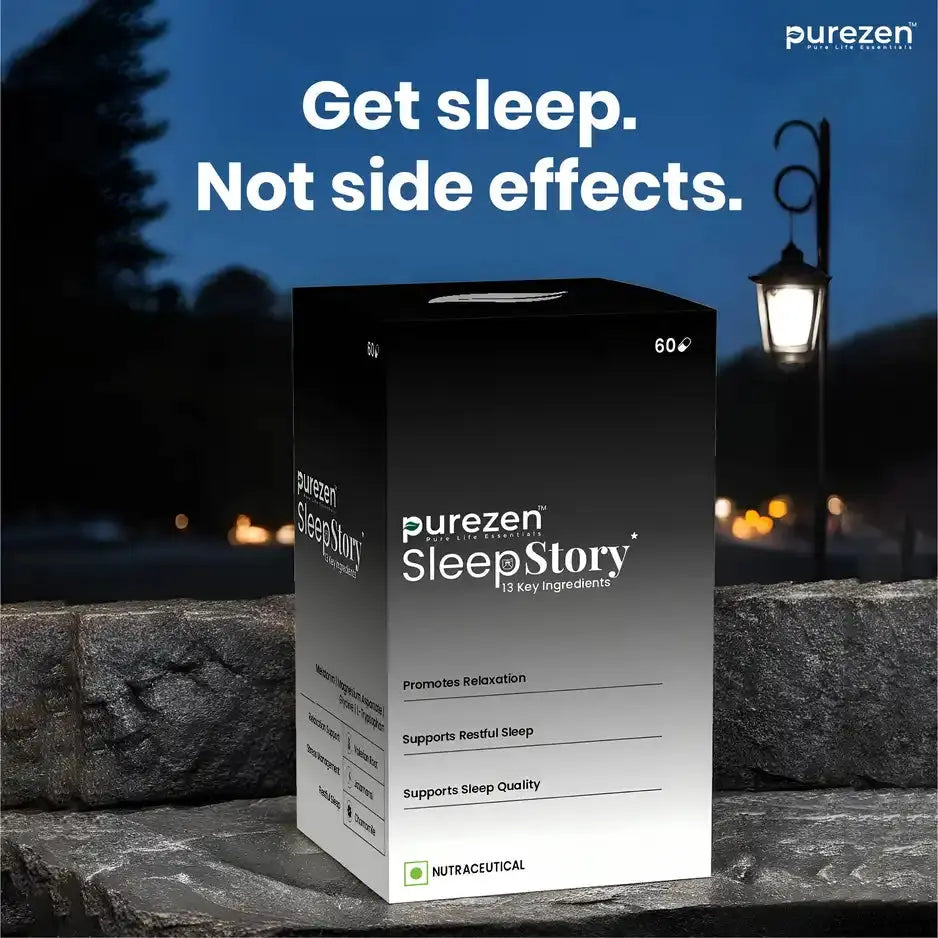
Note: Purezen SleepStory supports sleep quality as a nutritional supplement. It does not compensate for insufficient sleep duration. The foundation for recovering from sleep deprivation is consistently getting adequate sleep hours.
What sleep deprivation actually does
The effects of insufficient sleep build surprisingly quickly. After even one night of poor sleep, cognitive performance, reaction time and emotional regulation are measurably affected. With chronic sleep restriction, meaning consistently getting less sleep than the body needs over days, weeks or months, the effects compound: the immune system becomes less effective, metabolism shifts toward fat storage, inflammatory markers rise, and mood disorders become more likely. The body is carrying out essential maintenance during sleep, and when that maintenance is repeatedly cut short, the effects show up across multiple systems.
What makes chronic sleep deprivation particularly difficult to manage is that people adapt to feeling tired and underestimate how impaired they are. The feeling of sleepiness stabilises even as the actual performance deficits continue to accumulate.
Common causes of ongoing sleep deprivation in adults
- Work schedules and commute times that leave insufficient time for sleep
- Shift work and irregular hours that conflict with natural sleep timing
- Young children disrupting sleep for extended periods
- Underlying sleep disorders like sleep apnoea that reduce sleep quality
- Habitual late-night screen use and delayed sleep timing
- Stress and anxiety that make it difficult to sleep even when time is available
Signs of accumulated sleep deprivation
- Persistent tiredness that does not improve significantly with a single good night's sleep
- Difficulty concentrating, slowed thinking or poor memory
- Emotional reactivity, low mood or increased anxiety
- Frequent illness suggesting reduced immune function
- Reliance on caffeine to function through the day
How nutritional support fits into a sleep recovery plan
Improving sleep quality within available hours is one meaningful contribution a sleep supplement can make. Even if total sleep time is constrained by life circumstances, supporting deeper and more restorative sleep in the hours available helps reduce the physiological cost. Here is what the actives in SleepStory do:
- Melatonin — a hormone the body produces naturally at night to signal that it is time to rest. A small, supplemental amount helps reinforce this signal, particularly when sleep timing has been thrown off by late screens or irregular schedules.
- L-Theanine — an amino acid commonly found in green tea that supports a calm, relaxed state without causing drowsiness the next morning. It pairs well with melatonin because it addresses the mental restlessness that often delays sleep onset.
- Chamomile (extract) — traditionally used to support relaxation and ease the transition into sleep. It has been part of evening wellness routines across cultures for centuries and remains one of the better-studied botanicals for calming the nervous system.
- Magnesium — a mineral involved in hundreds of enzymatic processes, including those that regulate muscle relaxation and nervous system activity. Low magnesium intake is common in modern diets and is often associated with difficulty winding down at night.
- Tagara (Indian Valerian) — a classical Ayurvedic herb traditionally used to support restful sleep and a quieter mind at bedtime.
- Ashwagandha — an adaptogen commonly used to support the body's response to stress, which is frequently an underlying factor in poor sleep quality.
About Purezen SleepStory
SleepStory supports the conditions for deeper, more settled sleep. For someone in a sleep-deprived pattern, the aim is to make the sleep they do get as restorative as possible while they work on the habits and circumstances that allow for adequate duration. It is non-habit-forming, plant-based and formulated for regular nightly use.
Quality and safety: FSSAI-approved, GMP-certified, ISO 22000, HACCP-certified, Non-GMO and 3rd-party NABL lab-tested. Vegetarian and plant-based. Every batch carries transparent ingredient potencies with no hidden fillers.
₹1,495 ₹1,285 Shop SleepStory
Common myths about sleep supplements
Myth: A sleep supplement will knock you out like a sedative.
Fact: Non-habit-forming formulas work gently with your body's own wind-down signals rather than overriding them. The goal is a smoother transition into natural sleep, not sedation.
Myth: You will see a dramatic change in the first couple of nights.
Fact: Most natural formulas build their effect gradually as the body adjusts. Many people notice they feel calmer before bed within the first week, while more consistent sleep quality tends to improve over several weeks of use.
Myth: Natural ingredients carry no risks at all.
Fact: Natural ingredients are generally well-tolerated, but they deserve the same respect as any other health product. If you are pregnant, nursing, on prescription medication or managing a health condition, check with your doctor before starting.
What to expect from using SleepStory
Take it 30 to 60 minutes before bed, consistently every night. For people dealing with chronic sleep deprivation, allow 8 to 12 weeks to build a clear picture:
- Week 1 to 2: Pre-bed calm tends to improve. Sleep onset becomes easier for many people.
- Week 3 to 6: Sleep quality within available hours tends to improve, with fewer interruptions.
- Week 8 to 12: The cumulative benefit on daytime energy and cognitive function is often most clear in this window when combined with efforts to increase total sleep time.
Diet habits that support better sleep
What you eat and drink in the hours before bed has a meaningful impact on how well you sleep. A few practical adjustments that make a real difference:
- Avoid caffeine after early afternoon, as its stimulating effects can linger for 6 to 8 hours
- Keep dinner lighter and finish eating at least 2 to 3 hours before bed
- Include magnesium-rich foods in your daily diet: nuts, seeds, leafy greens, whole grains
- Try warm milk or chamomile tea as a wind-down ritual in the evening
- Limit alcohol, which disrupts the deeper stages of sleep even if it initially makes you feel drowsy
- Avoid large sugary snacks late at night, which can cause blood sugar swings that interrupt sleep
Lifestyle habits that support restful sleep
No supplement can substitute for the basics of good sleep hygiene. These habits are worth building alongside any nutritional support:
- Keep consistent sleep and wake times, including on weekends, to anchor your body clock
- Dim lights and step away from screens 30 to 60 minutes before bed
- Keep the bedroom cool, dark and quiet
- Try a few minutes of slow breathing or gentle stretching before lying down
- Get morning sunlight exposure early in the day, which helps set your circadian rhythm for the night
- Reserve the bed for sleep rather than work or scrolling
How to choose a sleep supplement and what to watch out for
When comparing sleep supplements, favour multi-ingredient formulas with transparent potencies, third-party lab testing and recognised certifications over single-ingredient products or blends with vague labels. Some common mistakes people make when choosing:
- Using screens right up to bedtime and expecting a supplement to compensate
- Relying entirely on a supplement while ignoring the sleep hygiene habits that actually anchor the benefit
- Taking it too close to sleep; 30 to 60 minutes before bed is the typical recommendation
- Combining it with alcohol or excess caffeine, which counteract the effect
When to see a doctor
Supplements are for general wellness support and are not intended to diagnose or address medical conditions. Consult a qualified doctor if your sleep difficulties are sudden, severe, persistent or getting worse, if you have an underlying medical condition, or if you are pregnant, nursing or on prescription medication. A professional can rule out underlying causes such as sleep apnoea, anxiety disorders or hormonal imbalances, and advise whether a supplement is appropriate for your situation. Purezen SleepStory is intended as one layer of support alongside good sleep habits and, where relevant, professional medical care.
Building SleepStory into a daily routine
Consistency matters more than any single night. The easiest approach is to anchor your supplement to a habit you already have. Keep the pack somewhere visible, set a gentle reminder for the first few weeks, and take it 30 to 60 minutes before bed with a glass of water. Pair it with a short wind-down routine and you have a simple, repeatable signal to your body that the day is ending. Give it at least 8 weeks before forming a firm opinion on how it is working for you.
Frequently asked questions
What counts as sleep deprivation?
Sleep deprivation occurs when a person consistently gets less sleep than their body needs for optimal function. For most adults this means fewer than 7 hours. Even mild, chronic sleep restriction, sleeping 6 hours a night rather than 8, accumulates as sleep debt with measurable effects on cognition, mood and physical health.
Can you fully recover from sleep deprivation?
The body is reasonably good at recovering from short-term sleep debt with a few nights of adequate sleep. Chronic sleep deprivation sustained over weeks or months is harder to fully recover from and may require sustained lifestyle changes alongside good sleep habits.
Does a sleep supplement help with the effects of sleep deprivation?
A supplement can help improve the quality of the sleep you do get, which makes a difference to how restorative it is. It cannot substitute for adequate sleep duration, but supporting deeper sleep in the hours available is a meaningful contribution.
What are the most important habits for addressing sleep deprivation?
Consistent sleep and wake times, reducing evening stimulants, managing stress and limiting screen use before bed have the most impact. A supplement supports the physiological conditions for sleep but works best alongside these behavioural changes.
Are there any side effects of Purezen SleepStory?
Purezen SleepStory uses well-tolerated, food-derived ingredients in measured amounts. FSSAI-approved, GMP-certified and NABL lab-tested. Consult a doctor if pregnant, nursing, on medication or managing a health condition.
A realistic summary
No supplement replaces adequate sleep duration, and it is important to be honest about that. What a well-formulated sleep supplement can do is support the quality of sleep within the hours available, ease the transition into sleep and address some of the physiological factors that make sleep more difficult. For people who are also working on increasing their total sleep time, this combination tends to produce the best outcomes. Explore Purezen SleepStory
Key points
- Sleep deprivation has wide-ranging effects on cognition, mood, immunity and metabolism.
- The primary recovery strategy is increasing total sleep duration alongside improving sleep quality.
- A sleep supplement can support the quality of available sleep but cannot substitute for adequate hours.
- Chronic or severe sleep deprivation warrants a conversation with a doctor, particularly to rule out underlying sleep disorders.
Disclaimer: Purezen products are nutraceuticals / health supplements, not medicines. They are not intended to diagnose, treat, cure or prevent any disease. The information here is for general educational purposes and is not a substitute for professional medical advice. Always consult a qualified healthcare professional before starting any supplement, especially if you are pregnant, nursing, on medication or managing a health condition. Individual results vary.