


Sleeplessness: Understanding the Causes and the Role of Nutritional Support
Sleeplessness is one of those problems that tends to compound itself. One difficult night raises anxiety about the next, which makes sleep harder again. This guide looks at what drives sleeplessness, which nutrients are commonly used to support the body's sleep mechanisms, and how to build a routine that addresses the problem from several angles at once.
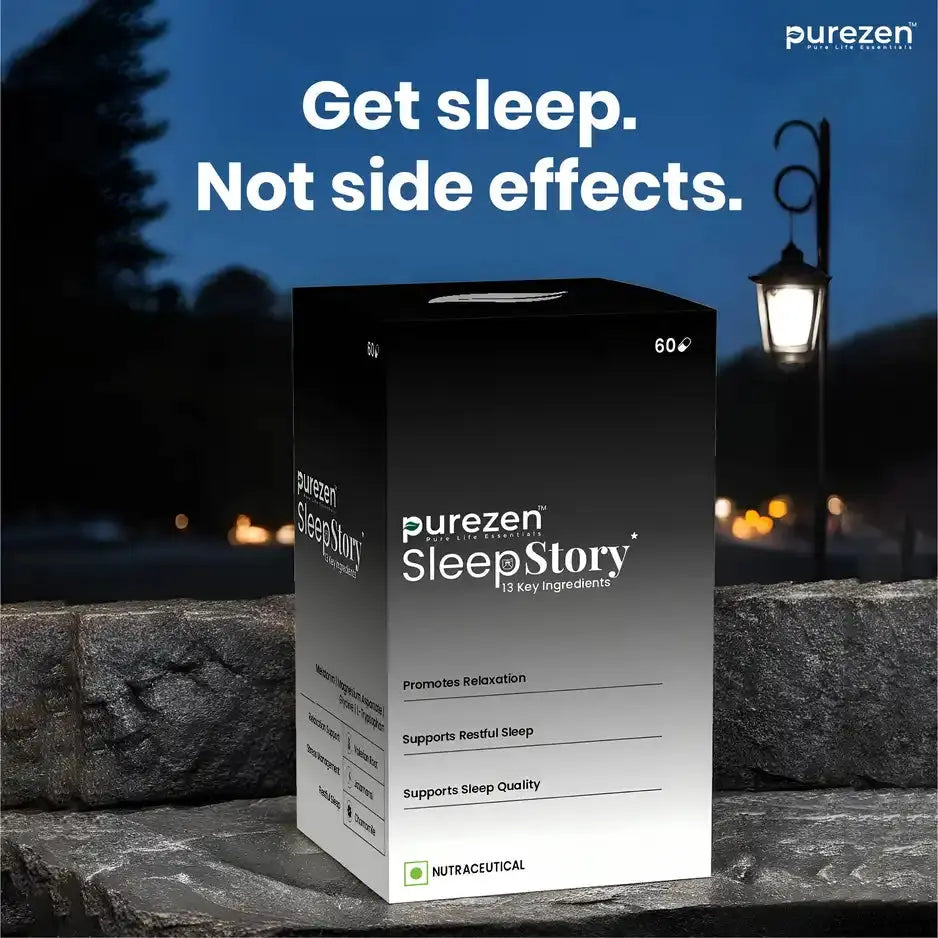
At a glance: Purezen SleepStory is a non-habit-forming blend combining Melatonin, L-Theanine, Chamomile and Magnesium to support the body's natural wind-down process. FSSAI-approved, GMP-certified and 3rd-party NABL lab-tested.
What sleeplessness actually looks like
Sleeplessness is not always the same experience. For some people it is difficulty falling asleep despite feeling tired. For others it is waking at 2 or 3am with a racing mind. Some wake early and cannot return to sleep. Some sleep for a full night but wake feeling as though they barely rested. These patterns point to different underlying factors, though they often overlap.
The common thread in most cases is a disruption somewhere in the body's sleep-wake cycle. This cycle depends on a balance between the drive to sleep, which builds throughout the day, and the circadian rhythm, which coordinates the timing of sleep with biological cues like light and temperature. When either is disrupted, sleep becomes harder to initiate, maintain or make feel restorative.
Common causes of sleeplessness
- Late-night screen use suppressing the natural melatonin signal
- An overactive mind or unresolved stress carried into the evening
- Caffeine, alcohol or heavy meals consumed too close to bedtime
- Irregular wake times that shift the circadian clock week to week
- Nutritional gaps, particularly magnesium, which plays a role in nerve and muscle relaxation
- Hormonal changes, anxiety or shift work
Signs that sleep quality is being affected
- Spending more than 20 to 30 minutes trying to fall asleep
- Waking multiple times through the night
- Morning grogginess that does not clear for an hour or more
- Daytime fatigue, poor concentration or low mood
What nutritional support for sleeplessness typically involves
Several nutrients and botanicals have established roles in supporting sleep. They tend to work through complementary pathways, which is why combining them in one formula makes more sense than taking them separately. Here is what each of the key actives in SleepStory does:
- Melatonin — a hormone the body produces naturally at night to signal that it is time to rest. A small, supplemental amount helps reinforce this signal, particularly when sleep timing has been thrown off by late screens or irregular schedules.
- L-Theanine — an amino acid commonly found in green tea that supports a calm, relaxed state without causing drowsiness the next morning. It pairs well with melatonin because it addresses the mental restlessness that often delays sleep onset.
- Chamomile (extract) — traditionally used to support relaxation and ease the transition into sleep. It has been part of evening wellness routines across cultures for centuries and remains one of the better-studied botanicals for calming the nervous system.
- Magnesium — a mineral involved in hundreds of enzymatic processes, including those that regulate muscle relaxation and nervous system activity. Low magnesium intake is common in modern diets and is often associated with difficulty winding down at night.
- Tagara (Indian Valerian) — a classical Ayurvedic herb traditionally used to support restful sleep and a quieter mind at bedtime.
- Ashwagandha — an adaptogen commonly used to support the body's response to stress, which is frequently an underlying factor in poor sleep quality.
About Purezen SleepStory
SleepStory is designed as a non-habit-forming nightly supplement. It brings together the melatonin signal, L-Theanine for mental calm, Chamomile for traditional botanical support, Magnesium for physical relaxation and two Ayurvedic herbs in a single formula. The intent is to address the several different things that interfere with falling and staying asleep, rather than relying on a single mechanism.
Quality and safety: FSSAI-approved, GMP-certified, ISO 22000, HACCP-certified, Non-GMO and 3rd-party NABL lab-tested. Vegetarian and plant-based. Every batch carries transparent ingredient potencies with no hidden fillers.
₹1,495 ₹1,285 Shop SleepStory
Common myths about sleep supplements
Myth: A sleep supplement will knock you out like a sedative.
Fact: Non-habit-forming formulas work gently with your body's own wind-down signals rather than overriding them. The goal is a smoother transition into natural sleep, not sedation.
Myth: You will see a dramatic change in the first couple of nights.
Fact: Most natural formulas build their effect gradually as the body adjusts. Many people notice they feel calmer before bed within the first week, while more consistent sleep quality tends to improve over several weeks of use.
Myth: Natural ingredients carry no risks at all.
Fact: Natural ingredients are generally well-tolerated, but they deserve the same respect as any other health product. If you are pregnant, nursing, on prescription medication or managing a health condition, check with your doctor before starting.
How to use it and what to expect
Take SleepStory 30 to 60 minutes before bed, consistently, every night. Most natural formulas take a few weeks to show their effect fully, so give it at least 8 to 12 weeks before drawing conclusions. A rough timeline:
- Week 1 to 2: The evening wind-down may feel calmer and sleep onset a little easier.
- Week 3 to 6: More consistent sleep through the night for many people. Less time lying awake.
- Week 8 to 12: Sleep quality and morning refreshment tend to be most noticeably improved in this window with consistent use.
- Beyond 3 months: Sustained use supports the overall sleep rhythm alongside the habits below.
Diet habits that support better sleep
What you eat and drink in the hours before bed has a meaningful impact on how well you sleep. A few practical adjustments that make a real difference:
- Avoid caffeine after early afternoon, as its stimulating effects can linger for 6 to 8 hours
- Keep dinner lighter and finish eating at least 2 to 3 hours before bed
- Include magnesium-rich foods in your daily diet: nuts, seeds, leafy greens, whole grains
- Try warm milk or chamomile tea as a wind-down ritual in the evening
- Limit alcohol, which disrupts the deeper stages of sleep even if it initially makes you feel drowsy
- Avoid large sugary snacks late at night, which can cause blood sugar swings that interrupt sleep
Lifestyle habits that support restful sleep
No supplement can substitute for the basics of good sleep hygiene. These habits are worth building alongside any nutritional support:
- Keep consistent sleep and wake times, including on weekends, to anchor your body clock
- Dim lights and step away from screens 30 to 60 minutes before bed
- Keep the bedroom cool, dark and quiet
- Try a few minutes of slow breathing or gentle stretching before lying down
- Get morning sunlight exposure early in the day, which helps set your circadian rhythm for the night
- Reserve the bed for sleep rather than work or scrolling
How to choose a sleep supplement and what to watch out for
When comparing sleep supplements, favour multi-ingredient formulas with transparent potencies, third-party lab testing and recognised certifications over single-ingredient products or blends with vague labels. Some common mistakes people make when choosing:
- Using screens right up to bedtime and expecting a supplement to compensate
- Relying entirely on a supplement while ignoring the sleep hygiene habits that actually anchor the benefit
- Taking it too close to sleep; 30 to 60 minutes before bed is the typical recommendation
- Combining it with alcohol or excess caffeine, which counteract the effect
When to see a doctor
Supplements are for general wellness support and are not intended to diagnose or address medical conditions. Consult a qualified doctor if your sleep difficulties are sudden, severe, persistent or getting worse, if you have an underlying medical condition, or if you are pregnant, nursing or on prescription medication. A professional can rule out underlying causes such as sleep apnoea, anxiety disorders or hormonal imbalances, and advise whether a supplement is appropriate for your situation. Purezen SleepStory is intended as one layer of support alongside good sleep habits and, where relevant, professional medical care.
Building SleepStory into a daily routine
Consistency matters more than any single night. The easiest approach is to anchor your supplement to a habit you already have. Keep the pack somewhere visible, set a gentle reminder for the first few weeks, and take it 30 to 60 minutes before bed with a glass of water. Pair it with a short wind-down routine and you have a simple, repeatable signal to your body that the day is ending. Give it at least 8 weeks before forming a firm opinion on how it is working for you.
Frequently asked questions
Is it safe to take a sleep supplement every night?
Non-habit-forming formulas that combine low-dose melatonin with calming botanicals like chamomile and L-theanine are designed for regular nightly use. Unlike sedatives, they support your body's own rhythm rather than overriding it.
Will a sleep supplement make me groggy in the morning?
Well-balanced blends with L-theanine and an appropriate melatonin dose aim to support restful sleep without leaving you sluggish the next day. Taking it 30 to 60 minutes before bed and keeping the dose moderate both help.
How is a natural sleep supplement different from sleeping pills?
Prescription or OTC sleeping pills work by sedating the brain and can be habit-forming over time. A botanical sleep formula gently nudges your body's natural wind-down signals and is formulated to be non-habit-forming.
How long before I notice a difference?
Many people feel calmer before bed within the first week. Consistent sleep quality, including falling asleep faster and waking less, tends to improve over several weeks of daily use alongside good sleep habits.
Are there any side effects of Purezen SleepStory?
Purezen SleepStory uses well-tolerated, food-derived ingredients in measured amounts and is FSSAI-approved, GMP-certified, ISO 22000, HACCP-certified, Non-GMO and 3rd-party NABL lab-tested. Most people use it without any issues, but if you are pregnant, nursing, on medication or managing a health condition, consult your doctor first.
On persistence and patience
Sleeplessness that has built up over months rarely resolves in a week. The most effective approach is layered: reduce the things that disrupt your body clock, build consistent sleep habits, and use a well-formulated supplement to support the body's own chemistry. Stick with it for 8 to 12 weeks, track how you feel week by week, and most people find the picture genuinely improves. Explore Purezen SleepStory
Key points
- Sleeplessness usually has multiple contributing factors rather than a single cause.
- Nutrients like melatonin, L-theanine and magnesium support the body's own sleep mechanisms.
- A supplement works best alongside consistent sleep habits, not as a standalone fix.
- Allow at least 8 to 12 weeks for the full effect to build.
- Consult a doctor if sleeplessness is persistent, severe or affecting daily life.
Disclaimer: Purezen products are nutraceuticals / health supplements, not medicines. They are not intended to diagnose, treat, cure or prevent any disease. The information here is for general educational purposes and is not a substitute for professional medical advice. Always consult a qualified healthcare professional before starting any supplement, especially if you are pregnant, nursing, on medication or managing a health condition. Individual results vary.